My friends tease me about loving citrus in my salads. (I know I know - "what's wrong with your friends that they think that's so weird?" you're asking. J)
But I do love citrus in salads, and it makes the winter months as lovely a salad season as is summer, in my book.
Here is a simple, delicious salad of organic spinach, yellow bell pepper, English cucumber, green onion, and a blood orange (from my friend Marcia's tree).
I dressed it with a simple vinaigrette of Meyer lemon juice and a rich flavored olive oil from Figone's (Sonoma County residents - check them out!). Some black pepper and a tiny pinch of sea salt.
Wonderful!
Wednesday, March 23, 2011
Thursday, January 20, 2011
Beautiful Side Dishes
Readers may remember that I love to cook from Joanne Harris’ and Fran Warde’s cookbook, The French Market. If I ever come close to cooking every recipe in a particular cookbook, this may be the one I'll choose. (I won't do it in a year, and I won't blog about it.) I've made a number of dishes from this book: I love the Poulet Chausseur (a sort of French Cacciatore), the Chèvre aux Figues, which always gets rave reviews when I bring it to gatherings, and the wonderful and homey Lentilles du Puy, which I've posted about before.The book contains wonderful side dish recipes for all seasons. As all manner of greens are beautiful in my area this time of year, I elected to try the Bettes du Vigneron, or Vineyard-Style Swiss Chard.
This recipe calls for Swiss Chard, a sliced onion, garlic, raisins, toasted pine nuts, lemon juice, sea salt and pepper. So I assembled my ingredients. I toasted the pine nuts, gathered some raisins, a Meyer lemon, and sea salt.
I washed and chopped my Chard.
I sliced my onion (I chose a red onion - I thought its sharpness would be great with the other flavors), and sautéed it with the chard stems. When they were soft, I added the chard leaves, the minced garlic, and some salt and pepper. I upped the heat a bit and sautéed them just till the leaves were softened. Then I added the raisins and pine nuts, sprinkled on the lemon juice, and mixed it all up.
Wow! The slight bitterness of the chard, the sweetness of the raisins, the sharpness of the onions and lemon and the nutty crunch of the pine nuts were such a lovely flavor combination! So much better than the quick sauté in oil and garlic that I usually do with chard!
I suppose one would normally serve a vegetable like chard with a white wine, such as a Sauvignon Blanc. However, I think that the addition of the raisins and onions provides opportunity for fuller bodied whites - perhaps a Viognier - or a light bodied red. Quite delicious!
Wednesday, January 5, 2011
Winery Adventure: Special New Year's Edition!
Readers will (or perhaps won't :) remember that Mock Turtle and I have a long-standing New Year's tradition of visiting a new wine region, tasting, and generally having fun bringing in the New Year together. This year was no exception, and on New Year's Day we headed up to Healdsburg, CA at the edge of Sonoma County's Dry Creek Valley appellation to see how many tasting rooms we could find open.
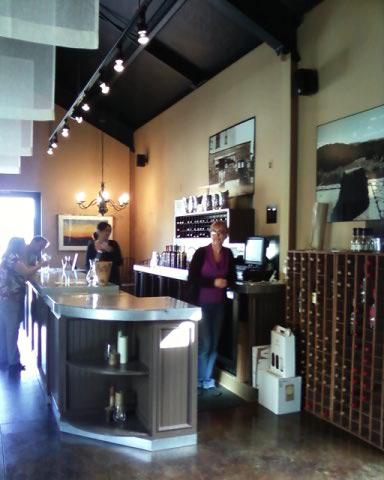
We quickly gave up on the wineries outside of town, and parked near the little Healdsburg Plaza to walk around and see what we could find. We wandered into Thumbprint Cellars - an elegant, art-filled tasting room that was a perfect setting for tasting some lovely wines. The 2009 Reisling and Viognier were each floral, dry and pleasant, although I think I would have enjoyed a little crisper acidity in each of them. I particularly enjoyed the 2008 Pinot Noir from the Russian River Valley. It had a cherry nose, with notes of red currant, tobacco and cocoa powder. I loved the balance.
We also tasted the 2007 Alexancer Valley Syrah, with a velvety mouth feel and notes of cassis and dried cherries, the 2007 Dry Creek Valley Zinfandel with flavors of black cherry, nutmeg and chocolate covered blueberries, and the 2007 Alexander Valley Cabernet, with an earthy nose and notes of cassis, blueberry and dark chocolate.
The folks at Thumbprint sent us down to Camellia Cellars, where we got a chance to taste some older wines. The 2001 Sangiovese had an earthy nose with notes of tobacco and cherry. The 2006 Zinfandel had notes of black cherry and cassis with some black pepper, and I thought it would pear nicely with a bolognese sauce. The 2002 Cab was very smooth, with notes of mushrooms, cassis, cocoa in the finish. I wanted a pot roast with it. My favorite was the 2002 Diamo Grazie, a blend of Sangiovese, Cab, Cab Franc and Petit Sirah - a very nicely balanced wine with notes of cigar box and currant. If you visit, say hi to Brett!
Longboard Vineyards was a great find. I loved every wine we tasted, and plan to return with friends. With seven wines to taste, I'll just hit the highlights: The 2008 Chardonnay was the standout of the whites. This was a beautiful wine, richly flavored yet only lightly oaked with just a bit of butter and hints of pie spice in the finish. We also loved the 2008 Dakine Merlot, composed of 82% Merlot and 18% Malbec. I really tasted the Malbec - it lent lots of "blue" notes, and the wine was spicy and balanced. We wanted to pair it with smoked turkey!
We had the added plus of being able to chat at length with winemaker Oded Shakked as he poured for us. He told us about his love of Syrah and his desire to build more of a Syrah following in Sonoma County. I think he has a good shot at it, in light of how lovely the two Syrahs we tasted were! The 2006 Russian River Dakine Vineyard Syrah (90% Syrah, the rest a blend of Rhone varietals that I didn't write down) had a mushroomy nose, notes of blueberry and cedar, with black pepper and some sort of baking spice that I don't bake enough to be able to discern. We wanted a big steak with it! The 2006 Sonoma Coast Rodger's Creek Syrah had a deeper color and darker fruit than the Dakine - earthy, spicy, velvety with notes of cigar box, blackberry and a hint of custard in the finish. Beautiful!
Go visit Longboard. And say hello to Oded!
Last stop of the day was Topel Winery. Once again, there were a large number of wines to taste, so I'll just mention my favorites. I particularly enjoyed the 2007 St. Helena Battuello Vineyard Cabernet with notes of leather and dried cherries. It was just released, an I'd like to go back to see how it develops. Another favorite was the 2006 Le Mariage bordeaux blend - it had a soft mouth feel with notes of blackberry and black pepper. Quite lovely. Interesting honorable mention goes to the 2006 Topel Estate Syrah Noir (a Syrah clone), with lots of black fruit, blueberry, white pepper and a hint of chocolate.
MT and I rounded out our tasting weekend with one more stop the next day to Audelssa, very close to my home. The tasting room was elegant and uncrowded, providing lots of opportunity for conversation, and the wines were lovely as well. Here are the highlights: First was the 2008 Sonoma County Chardonnay with a tropical fruit nose, and hints of citrus, white peach, pineapple, and a custard finish. Nice acidity, very nicely balanced. Then came the 2007 Zephyr - a GSM (Grenache, Syrah, Mourvedre) with notes of black cherry, leather, cassis, plum and cocoa in the finish. This was a big favorite! The 2007 Alder Springs Merlot had hints of black cherry, plum and mocha, and I wanted to serve a beef roast with it. The 2007 Tempest was beautiful, 95% Syrah, earthy, spicy, notes of pepper and cassis. Finally, the 2007 Reserve Cabernet was lovely, smooth and balanced with notes of leather and candied cherries. We loved these wines, and I look forward to returning. If you visit, say hello to Andy!
That's the report from this year's New Years Wine Weekend! Some great finds here in Sonoma County!
We quickly gave up on the wineries outside of town, and parked near the little Healdsburg Plaza to walk around and see what we could find. We wandered into Thumbprint Cellars - an elegant, art-filled tasting room that was a perfect setting for tasting some lovely wines. The 2009 Reisling and Viognier were each floral, dry and pleasant, although I think I would have enjoyed a little crisper acidity in each of them. I particularly enjoyed the 2008 Pinot Noir from the Russian River Valley. It had a cherry nose, with notes of red currant, tobacco and cocoa powder. I loved the balance.
We also tasted the 2007 Alexancer Valley Syrah, with a velvety mouth feel and notes of cassis and dried cherries, the 2007 Dry Creek Valley Zinfandel with flavors of black cherry, nutmeg and chocolate covered blueberries, and the 2007 Alexander Valley Cabernet, with an earthy nose and notes of cassis, blueberry and dark chocolate.
The folks at Thumbprint sent us down to Camellia Cellars, where we got a chance to taste some older wines. The 2001 Sangiovese had an earthy nose with notes of tobacco and cherry. The 2006 Zinfandel had notes of black cherry and cassis with some black pepper, and I thought it would pear nicely with a bolognese sauce. The 2002 Cab was very smooth, with notes of mushrooms, cassis, cocoa in the finish. I wanted a pot roast with it. My favorite was the 2002 Diamo Grazie, a blend of Sangiovese, Cab, Cab Franc and Petit Sirah - a very nicely balanced wine with notes of cigar box and currant. If you visit, say hi to Brett!
Longboard Vineyards was a great find. I loved every wine we tasted, and plan to return with friends. With seven wines to taste, I'll just hit the highlights: The 2008 Chardonnay was the standout of the whites. This was a beautiful wine, richly flavored yet only lightly oaked with just a bit of butter and hints of pie spice in the finish. We also loved the 2008 Dakine Merlot, composed of 82% Merlot and 18% Malbec. I really tasted the Malbec - it lent lots of "blue" notes, and the wine was spicy and balanced. We wanted to pair it with smoked turkey!
We had the added plus of being able to chat at length with winemaker Oded Shakked as he poured for us. He told us about his love of Syrah and his desire to build more of a Syrah following in Sonoma County. I think he has a good shot at it, in light of how lovely the two Syrahs we tasted were! The 2006 Russian River Dakine Vineyard Syrah (90% Syrah, the rest a blend of Rhone varietals that I didn't write down) had a mushroomy nose, notes of blueberry and cedar, with black pepper and some sort of baking spice that I don't bake enough to be able to discern. We wanted a big steak with it! The 2006 Sonoma Coast Rodger's Creek Syrah had a deeper color and darker fruit than the Dakine - earthy, spicy, velvety with notes of cigar box, blackberry and a hint of custard in the finish. Beautiful!
Go visit Longboard. And say hello to Oded!
Last stop of the day was Topel Winery. Once again, there were a large number of wines to taste, so I'll just mention my favorites. I particularly enjoyed the 2007 St. Helena Battuello Vineyard Cabernet with notes of leather and dried cherries. It was just released, an I'd like to go back to see how it develops. Another favorite was the 2006 Le Mariage bordeaux blend - it had a soft mouth feel with notes of blackberry and black pepper. Quite lovely. Interesting honorable mention goes to the 2006 Topel Estate Syrah Noir (a Syrah clone), with lots of black fruit, blueberry, white pepper and a hint of chocolate.
MT and I rounded out our tasting weekend with one more stop the next day to Audelssa, very close to my home. The tasting room was elegant and uncrowded, providing lots of opportunity for conversation, and the wines were lovely as well. Here are the highlights: First was the 2008 Sonoma County Chardonnay with a tropical fruit nose, and hints of citrus, white peach, pineapple, and a custard finish. Nice acidity, very nicely balanced. Then came the 2007 Zephyr - a GSM (Grenache, Syrah, Mourvedre) with notes of black cherry, leather, cassis, plum and cocoa in the finish. This was a big favorite! The 2007 Alder Springs Merlot had hints of black cherry, plum and mocha, and I wanted to serve a beef roast with it. The 2007 Tempest was beautiful, 95% Syrah, earthy, spicy, notes of pepper and cassis. Finally, the 2007 Reserve Cabernet was lovely, smooth and balanced with notes of leather and candied cherries. We loved these wines, and I look forward to returning. If you visit, say hello to Andy!
That's the report from this year's New Years Wine Weekend! Some great finds here in Sonoma County!
Thursday, December 30, 2010
Civet Poop Coffee!
My culinary student and former barista nephew Joel slipped a fun present into my Christmas stocking this year. (For those of you who are now crushed because you were laboring under the delusion belief that only Santa fills stockings, my sincerest apologies.)
It was this!
Famed as one of the most prized and expensive coffees in the world, Kopi Luwak is produced in Indonesia. The coffee berries are eaten by the Asian Palm Civet (an adorable little animal), pooped out, gathered, cleaned, roasted, and the resultant coffee is flavorful and reputedly less bitter than other coffees.
Who knew? I didn't know, but my nephew did, and he was insistent upon tasting the coffee with me.
So off we marched to the kitchen to brew a pot and try it out. Joel's mom wasn't exactly thrilled about the idea of any coffee having to do with poop coming anywhere near her coffee maker, so we brewed it in the French Press - which was much more fun anyway.
As you'll see, we boiled the water, filled the press with coffee, added the water, and waited.
After the appropriate wait time, we pressed the coffee and tried it out!
Well what was the verdict? My nephew and I both wished we'd made the coffee a bit stronger. But that said, it was very smooth, very flavorful, with no bitterness at all. Two thumbs up!
And yes, it smells like coffee - it doesn't smell like poop!
It was this!
Famed as one of the most prized and expensive coffees in the world, Kopi Luwak is produced in Indonesia. The coffee berries are eaten by the Asian Palm Civet (an adorable little animal), pooped out, gathered, cleaned, roasted, and the resultant coffee is flavorful and reputedly less bitter than other coffees.
Who knew? I didn't know, but my nephew did, and he was insistent upon tasting the coffee with me.
So off we marched to the kitchen to brew a pot and try it out. Joel's mom wasn't exactly thrilled about the idea of any coffee having to do with poop coming anywhere near her coffee maker, so we brewed it in the French Press - which was much more fun anyway.
As you'll see, we boiled the water, filled the press with coffee, added the water, and waited.
After the appropriate wait time, we pressed the coffee and tried it out!
Well what was the verdict? My nephew and I both wished we'd made the coffee a bit stronger. But that said, it was very smooth, very flavorful, with no bitterness at all. Two thumbs up!
And yes, it smells like coffee - it doesn't smell like poop!
Tuesday, November 23, 2010
Life Sans Microwave
So when did you buy your first microwave oven? I’m sitting here trying to remember, but can’t quite. I’ve been going through each of my apartments in my mind over the last several years, trying to recall in which dwelling I can “see” a microwave sitting on the counter. It appears in my memory sometime in the ‘90s, although I can’t pinpoint the year.
Never mind. Leaving aside the trip down memory lane, let’s just say that like most people, I’ve probably owned a microwave oven pretty steadily for somewhere between 10 and 15 years.
And now I don’t!
I was rarely one to cook entire meals in my microwave oven. However I had been accustomed to using one daily, whether to boil water, defrost frozen foods (if I was in a pinch), or to quickly heat up leftovers. Ever since I bought my first microwave oven, it has been a standard kitchen appliance, seemingly as necessary as my coffee pot.
However now, lovely though my new kitchen is, I don’t have room for one. Counter space is at a premium and I’m unwilling to relinquish an inch of it to a microwave. And I suppose I could buy a small stand for one, as I have done in the past. But floor space is limited as well, and I’m loath to make my kitchen feel any more cramped than it already does.
So I’m living without one, and you know what? I’m managing just fine! I’ve reverted to using the same methods I used before microwaves were inexpensive enough to own and I bought my first one - whenever that was!
I boil water (infrequently as a matter of fact, not being a tea drinker) in a pan on the stove (no, I don’t have a teapot either – note the non-tea-drinking thing). I defrost food the old fashioned way – time. And I heat up leftovers in the oven, or in my Creuset saucepan on the stovetop, covered with a bit of liquid (stovetop is faster, I find). It takes a bit more time. I have to plan ahead a bit – leftovers aren't hot in 2 minutes; it takes more like 10-15, depending on the food item.
I'm a bit surprised to find I’m not missing that microwave, and I have no plans to buy one in the near future!
I feel like a pioneer or something. You know, a homesteader. Stage coaches and what not. I think my family thinks I’m a bit nuts (as if they needed another reason :)
And I’m feeling a bit smug about it!
Monday, November 8, 2010
Planting Party & Wine Tasting
As I have reported in the past, CornerStone in Sonoma is a fun collection of gardens, wine tasting rooms and shops focused on design. An added plus is the frequent community events they host, such as this weekend's Fall Planting Party.
So I showed up looking forward to creating a pot full of bulbs that will brighten up the little balcony of my new home! The event featured a lovely (and well priced!) selection of bulbs, planting pots, and CornerStone's own horticulturist, Dawn who assisted participants in creating our own pots full of bulbs that will bloom from late winter through spring, year after year.
So I headed off to visit my friend Tom at Potter Green & Co., and selected a beautiful celadon colored pot for my bulbs, plus some worm casings for fertilizer. Then I came to the Planting area.
I selected a variety of bulbs - some narcissus, some tulips, some crocuses and muscari and anenomes - and brought them over to a work table to build my planter.
I added rocks on the bottom, soil and fertilizer, and a row of the tallest growing bulbs, some more soil and the shorter bulbs, and then topped the planter of with some violas, since I wanted the instant gratification of Color Right Now. Here is the end result!
But no visit to CornerStone is complete without wine tasting, and the Fall Planting event included complimentary tastings. How great is that? So my first stop was Meadowcroft tasting room, a relatively new addition pouring a selection of wine labels under Meadowcroft's ownership.
I got two free samples, and selected the 2009 Thomas Henry Verdelho, as it was unfamiliar to me. Verdelho is a varietal from Portugal, and this one was grown in Lodi (Borden Ranch AVA). It was floral in the nose, with notes of white peach and a pleasant though not exactly crisp acidity, and I found it quite enjoyable. I also tasted the 2006 Magito Cabernet Blend, with grapes from Chalk Hill and Alexander Valley in Sonoma County. It contained 60% Cab, 20% Merlot and 20% Cab Franc, had a jammy nose, Big Black Cherry flavor and some cassis in the finish. Very nice!
My next stop was the Keating Wines tasting room, also a relatively new addition.
I really enjoyed these wines! First I tasted a 2008 Sonoma Valley Merlot, with a berry nose and notes of red and black cherry and rasberry. I found it young, and dare I say it, a little thin. However, the 2006 Rockpile Malbec was much more impressive - very soft with cherry and blueberry notes. Better still was the 2007 Rockpile Petite Sirah - a rich wine with notes of blackberry, black cherry and cassis. My server John and I thought it would pair beautifully with grilled tri-tip.
Last were two cabs. The recently released 2008 Montecillo Cab was a bit young and tight, with some red current notes. I am curious to see how this wine will develop as it ages. However, I really enjoyed the 2008 Napa Beckstoffer Georges III Cabernet Sauvignon - a 100% cab sourced from the Rutherford appellation which officially hasn't even been released yet. A lovely claret color, an herbaceous nose with hints of eucalyptus, and notes of red current. I really loved this wine, and savored sipping it while I chatted with my server about things to expect from this year's challenging vintage.
All in all, a very enjoyable afternoon of planting, sipping and chatting with friendly folks! And here is the end result of my adventure on my little balcony.
So I showed up looking forward to creating a pot full of bulbs that will brighten up the little balcony of my new home! The event featured a lovely (and well priced!) selection of bulbs, planting pots, and CornerStone's own horticulturist, Dawn who assisted participants in creating our own pots full of bulbs that will bloom from late winter through spring, year after year.
So I headed off to visit my friend Tom at Potter Green & Co., and selected a beautiful celadon colored pot for my bulbs, plus some worm casings for fertilizer. Then I came to the Planting area.
I selected a variety of bulbs - some narcissus, some tulips, some crocuses and muscari and anenomes - and brought them over to a work table to build my planter.
I added rocks on the bottom, soil and fertilizer, and a row of the tallest growing bulbs, some more soil and the shorter bulbs, and then topped the planter of with some violas, since I wanted the instant gratification of Color Right Now. Here is the end result!
But no visit to CornerStone is complete without wine tasting, and the Fall Planting event included complimentary tastings. How great is that? So my first stop was Meadowcroft tasting room, a relatively new addition pouring a selection of wine labels under Meadowcroft's ownership.
I got two free samples, and selected the 2009 Thomas Henry Verdelho, as it was unfamiliar to me. Verdelho is a varietal from Portugal, and this one was grown in Lodi (Borden Ranch AVA). It was floral in the nose, with notes of white peach and a pleasant though not exactly crisp acidity, and I found it quite enjoyable. I also tasted the 2006 Magito Cabernet Blend, with grapes from Chalk Hill and Alexander Valley in Sonoma County. It contained 60% Cab, 20% Merlot and 20% Cab Franc, had a jammy nose, Big Black Cherry flavor and some cassis in the finish. Very nice!
My next stop was the Keating Wines tasting room, also a relatively new addition.
I really enjoyed these wines! First I tasted a 2008 Sonoma Valley Merlot, with a berry nose and notes of red and black cherry and rasberry. I found it young, and dare I say it, a little thin. However, the 2006 Rockpile Malbec was much more impressive - very soft with cherry and blueberry notes. Better still was the 2007 Rockpile Petite Sirah - a rich wine with notes of blackberry, black cherry and cassis. My server John and I thought it would pair beautifully with grilled tri-tip.
Last were two cabs. The recently released 2008 Montecillo Cab was a bit young and tight, with some red current notes. I am curious to see how this wine will develop as it ages. However, I really enjoyed the 2008 Napa Beckstoffer Georges III Cabernet Sauvignon - a 100% cab sourced from the Rutherford appellation which officially hasn't even been released yet. A lovely claret color, an herbaceous nose with hints of eucalyptus, and notes of red current. I really loved this wine, and savored sipping it while I chatted with my server about things to expect from this year's challenging vintage.
All in all, a very enjoyable afternoon of planting, sipping and chatting with friendly folks! And here is the end result of my adventure on my little balcony.
Wednesday, October 20, 2010
Zion 2010 Report: Camping, Foodie Style!
Now, it is certainly understandable that we didn't get great shots of the good cooking (or reheating of prior good cooking) and good drinking that went on in our homey little Zion campsite, because by the time we were cooking it was pitch dark.
(Photo by Cindy Powers)
But how could it happen that five women and five cameras didn't snap a single shot of the communal campsite where all the cooking and imbibing occurred? Shocking but true. Ah well. Trust me; it was a lovely home away from home :) Here is the secondary campsite. Nice view, eh?
(Photo by Cindy Powers)
So I'll just have to scatter Other Fun Photos around while I describe our fine dining. Could be worse :)
The first night, our bartender Desert Deb created cocktails for us that she labeled Flirtinis, while we set up camp and prepared to cook. We sipped our cocktails and snacked on chips dipped in tapenade and Rasberry Honey Mustard. We heated up a Split Pea Soup made pre-trip by yours truly (a wonderful recipe from Myra Goodman's Earthbound Farm Food to Live By cookbook), had Kim's homemade cookies for dessert, and sipped a very nice Torrontes and a lovely Enkidu Humbaba Rhone blend, as well.
Each morning we feasted on coffee, tea, cereal, yogurt, melons, bagels, and fresh eggs from Desert Deb's own chickens. Yum! And then we packed sandwiches, fruit and trail mix for lunch. Here is a view from our first day's hiking trails.
(Photo by Daphne Drescher)
Our second night was an even greater feast. For the first course: more cocktails, and Deb's amazing vegetarian chili. Then Deb and I prepared a sweet potato/vegetable medley, sauteed mushrooms and spinach, and pan-seared steaks. Deb and I have cooked together quite a lot in our time, but that we prepared this fabulous meal in the dark with lanterns and flashlights is something I'm a bit proud of. We sipped a lovely Bordeaux and a spicy Shiraz (no idea about the labels - it was too dark - but we enjoyed them). Delish!
Next day was our much anticipated Narrows hike, and how I'm going to pick only one fabulous photo to sum it up, I do not know.
(Photo by Cindy Powers)
So I'll choose a second :)
(Photo by Cindy Powers)
Our last night, we had a lovely meal at the Spotted Dog Cafe in Springdale, which has become a bit of a tradition for us. We relaxed, and had good food, wine and desserts. (And I also left my car/house keys behind there and failed to notice this until back in CA . . . but I digress. That's a tale for another blog post, which I will no doubt have to entitle, "I have always depended on the kindness of strangers - and dear friends too.")
Guess that brings the report on the 3rd annual Zion Camping Trip to an end. Good times, folks!
Labels:
camping,
cooking,
Enkidu Winery,
soup,
Zion Nat'l Park
Tuesday, September 28, 2010
Supper Club Barbeque!
This month, we made the theme for our Supper Club Barbeque to take advantage of the [very] warm weather - and what a feast it was!
We had amazing appetizers: stuffed eggs, spiced almonds that packed a punch, a fabulous Rick Bayless guacamole with bacon, and both corn and wheat chips for dipping! The Watermelon Punch was so refreshing on such a hot day - some of us mixed this with the delicious Cava we were drinking.
We enjoyed the most spectacular BBQ Pork with sauce and homemade buns: Oh. My. God. So smoky and delicious!
There were three incredible salads, including Grilled Watermelon & Tomato Salad (prepared by yours truly), and a German Fingerling Potato Salad, and the freshest, crispest Cole Slaw I've ever had (pic below).
Here you can see all the salads, including the splendid Corn Bread.
Don't you wish you'd been there?
How Does Your Garden Grow? Part 2
Here is a picture of tomatoes from my wacky EarthBox tomato plants. Early Girls in late September? (There is a Brandywine in there too.) Yes folks, it's been unusual weather here in Sonoma County this year, and lots of folks have had their tomatoes ripening unseasonably late.
Tuesday, September 7, 2010
Weekly Winery Adventure: Scribe Winery
My friend and fellow blogger, Bon Vivant, and I had wanted to visit Scribe Winery ever since this spectacular write-up came out in Food & Wine Magazine. We had our chance recently, when I made us an appointment on a sunny Sunday afternoon. It was quite a treat! Here's the story.
The winery and tasting room are located on a little hill overlooking the valley.
Nora was our server, and she sat us down at a pleasant table and chatted with us while we tasted. First up was the 2007 Chardonnay with grapes from Carneros.
This was a lovely wine, with a mere suggestion of butter in the nose (it spent 9 mos. in French oak), and notes of tart apple and tangerine, with a hint of lemon in the finish. We thought it would pair nicely with a creamy, lemony pasta dish, perhaps some rich shellfish - unctuous foods.
Next up was the 2008 Pinot Noir, also from Carneros.
I found red fruit in the nose, and notes of pie cherries, a little white pepper, and blueberry in the finish. It was quite soft, with a nice mouth feel. We thought it would pair well with smoked salmon, or roasted poultry.
The next wine was the 2004 Syrah, made of grapes from Atlas Peak.
I noted red fruit and something herbaceous in the nose, flavors of black cherry, blackberry and black pepper. We thought this wine would stand up to fattier meats - perhaps a leg of lamb, a marbled beef roast, or even pork belly.
Our last wine was the 2004 Cabernet Sauvignon, also from Atlas Peak.
I enjoyed this wine. It was velvety, softer and less tannic than the typical Napa Cab, with notes of Big Black Cherry, blackberry, and cassis in the finish. BV also noted green peppercorn. We thought the wine would pair particularly well with with braised pork and ancho chiles.
BV and I are trying to convince our fellow Supper Clubbers to attempt to replicate the Scribe pairing meal described in the Food & Wine article. Stay tuned for that report!
And when you check out Scribe Winery, say hello to Nora!
Tuesday, August 24, 2010
Farmers' Market Eggplant and a Favorite Recipe
I love eggplant.
I especially love small, tender young eggplant! I don't know the names of these varieties, but I know they are among my favorites, and I bought some at a recent Farmers Market.
One of my all time favorite eggplant recipes is Sweet-and-Sour Eggplant with Ricotta Salata. See the link for the recipe; here's what I did.
I caramelized sugar in some water in a saucepan, and then added vinegar, tomatoes, garlic and oil. I seasoned with salt and white pepper (the white pepper really makes a difference). This simmered for about 1/2 hour.
Meanwhile, I sliced up my eggplants, laid the slices out on a baking sheet, brushed them with oil, seasoned them, and roasted them in a 400 degree oven for about 20 minutes, turning them in the middle.
I then spooned tomato sauce over it to cover, and baked it for 20 minutes more until it was bubbling and browning. When it came out of the oven, I sprinkled over the mint and cheese. I substituted a Greek feta - I've used this substitution in the past, and it works just fine if ricotta salata is difficult to find.
The finished dish can be served, hot or room temperature, with any remaining tomato sauce on the side. I think the flavor is beyond compare - the combination of the sugar and vinegar in the sauce taste almost candied, and the slightly bitter and salty flavors from the eggplant and cheese soften the sweetness. It's a wonderfully rich taste experience!
While the recipe suggests serving this with a Sicilian white or a Pinot Grigio, I really love it with a medium bodied red, such as a Chianti or Barbera. Enjoy!
Labels:
cooking,
eggplant,
farmer's market,
food wine pairings,
recipes
Saturday, August 14, 2010
Inedible Rubber
That’s my sorry verdict on my first pasta making attempt. Here's the story.
My friend Joseph, a Personal Chef and one of the chefs at the CIA in St. Helena, was among the folks sharing a glass or three of wine in honor of a friend’s birthday a while back. We were chatting about cooking matters, and he gave me a pasta making challenge. I told him I didn’t own a pasta maker, and he said I didn’t need one. This is the recipe Joseph gave me:
1 cup semolina flour
2 eggs
Pinch of salt
He told me to mix, knead, and roll out the dough as flat as possible, cut and cook for a short period of time.
Joseph was – intentionally I'm sure – vague about any additional instruction. I think he wanted me to learn stuff for myself.
I confess I did consult a few cookbooks for guidance. None of them contained Joseph’s exact recipe. However, they all generally discussed kneading the dough (5-8 minutes), rolling the dough out, and cutting it or putting itthrough the pasta machine.
So here is what I did.
I measured 1 cup semolina flour, and got out two eggs. I threw a pinch of Kosher salt into the flour. I beat up the eggs with a fork.
1 cup semolina flour
2 eggs
Pinch of salt
He told me to mix, knead, and roll out the dough as flat as possible, cut and cook for a short period of time.
Joseph was – intentionally I'm sure – vague about any additional instruction. I think he wanted me to learn stuff for myself.
I confess I did consult a few cookbooks for guidance. None of them contained Joseph’s exact recipe. However, they all generally discussed kneading the dough (5-8 minutes), rolling the dough out, and cutting it or putting itthrough the pasta machine.
So here is what I did.
I measured 1 cup semolina flour, and got out two eggs. I threw a pinch of Kosher salt into the flour. I beat up the eggs with a fork.
I poured the beaten eggs into the flour. At first, I mixed the eggs into the flour with the fork. Once it was pretty much blended, I turned the dough out onto a lightly floured plastic sheet and began kneading. After some kneading and adding small (very small) amounts of flour, the dough stopped sticking to my hands. I found it very difficult to work, and it felt tough and very un-pliable to me. Here is my dough after about 8 minutes of kneading. Looks tough, doesn't it?
I rolled the dough out as best I could. It was very difficult to do. Getting the dough to budge took all my strength, including leaning on the rolling pin with my elbows. I couldn’t roll it out any larger than this. The sheet was, I would estimate, 1/8 inch thick.
I cut the dough into very thin little strips about the size of linguine with my sharpest paring knife.
However, I may as well not have done this, since I realized once it was time to pop the pasta into the boiling water that it was stuck to the plastic board. I had to pry it up with a knife, and the effect of all my carefully cut almost perfect little strips was lost.
I didn’t want to overcook it (I wonder if it would have mattered); the mess boiled somewhere between 2 and 4 minutes.
Well as I say, the result was, sadly, pretty inedible. It tasted like polenta and that was fine, but the texture was hard and rubbery.
What went wrong? Clearly the problem occurred in the mixing or kneading stages. I intentionally didn't consult any pasta making videos before my attempt, but I have done so since (and I did find something very close to Joseph's recipe), and the texture of the dough in the videos was very different from mine - much softer. If I had to speculate, I’m guessing either I worked the flour into the eggs too quickly, or there was perhaps a bit too much flour, or perhaps it was something about the temperature of the eggs (they were straight from the fridge), or perhaps all of the above.
So it was an amusing little experiment (fortunately it didn’t take long), and I’ll be going back to Joseph for a good laugh and, finally, some real instructions.
Or better yet, I’ll see if I can convince him to give me and some of my friends an in-person lesson, because I have a feeling that this is one of these cooking techniques I have to watch, preferably in person, in order to learn.
So stay tuned for the next installment of pasta making experimentation. We have only one direction to go, my friends, and that is up!
All my pasta making friends out there - give me some advice in the comments, I beg you!
P.S. The pesto I made to go with this pasta was killer – and the pesto, at least, has not gone to waste!
So it was an amusing little experiment (fortunately it didn’t take long), and I’ll be going back to Joseph for a good laugh and, finally, some real instructions.
Or better yet, I’ll see if I can convince him to give me and some of my friends an in-person lesson, because I have a feeling that this is one of these cooking techniques I have to watch, preferably in person, in order to learn.
So stay tuned for the next installment of pasta making experimentation. We have only one direction to go, my friends, and that is up!
All my pasta making friends out there - give me some advice in the comments, I beg you!
P.S. The pesto I made to go with this pasta was killer – and the pesto, at least, has not gone to waste!
Sunday, July 18, 2010
The Great July Supper Club Antipasto Challenge!
Back in 2000, Food and Wine magazine sponsored an Antipasto Challenge between none other than famous chefs Mario Batali and Michael Chiarello. The magazine declared the competition a draw – you can read the article here.
Our amazing supper clubbers decided we would attempt to reproduce the challenge and see if we could determine a definitive winner. We made a few substitutions due to dietary issues, and prepared 8 dishes total – 4 Batali and 4 Chiarello. For pairing, we served the 2005 Milliaire Winery Primitivo Jeunesse, a very food friendly Zin from Amador County, and the 2007 Robert Sinskey Vin Gris of Pinot Noir, an equally lovely food wine. This is a chronicle of our noteworthy (if I do say so myself) efforts!
Batali presents first!
We enjoyed Batali’s Grilled-Fig Salad with Prosciutto, and as you can see, Rose’s presentation was gorgeous! Figs and prosciutto are a classic combination, and this dish was rich and earthy and paired nicely with the Sinskey, though the Primitivo worked as well. Rose felt the dish could actually have been improved by a bit less arugula so that the flavors of the fig and prosciutto were truly at the forefront.
Also in the line-up was Batali’s Roasted Squash with Red Onion, Oregano and Mint, prepared by yours truly. This dish was easy to make, well received, and one I know I will make again and again. If I had an improvement to suggest, I think I might slice the squash thinner than called for (which will likely reduce the cooking time), to create smaller servings. I actually liked this dish with both the wines.
Our next Batali dish was a substitution – Black Kale with Ricotta, prepared and modified a bit by Bon Vivant. I loved the freshness and simplicity of this dish, and it was a hit as well! I liked it with the Primitivo; it was very nice with the Sinskey too.
Last up for Batali, and my personal favorite dish of the day, was the Goat Cheese Truffles with Peperonata. We had fun discussing which of the three truffle flavors we liked best – I favored the fennel pollen, but many preferred the sweet paprika – all three were killer! I loved this dish with the Sinskey, but the Primitivo paired nicely with it as well. Richards thought she would make the truffles a bit smaller next time (again, it was a large serving), and several of us thought that while the peperonata was delicious, the truffles were the main event and could easily stand on their own with the arugula (again, less of it) to garnish them.
On to the Chiarello dishes!
We loved the Marinated Vegetables – one half was prepared largely as written but with tuna substituted for the anchovies, and the other half omitted the tuna. Both versions were great – I liked the one with the tuna best. My opinion was that, perhaps due to the vinegar, neither wine paired especially well with it. Also, BV reported it was quite time consuming to prepare – but well worth the effort I say - delicious!
Then we had the fabulous Italian Tuna Mousse! This dish had a perfect texture, light, airy and delicious, and I thought the Mousse with the Sinskey was the most perfect pairing of the evening!
The Wild Mushroom and Tomato Panzanella is a most unusual and interesting version of the classic Italian bread salad (and a recipe I have actually prepared numerous times, though I didn't prepare it this time). It was beautiful and tasty, and paired particularly well with the Primitivo.
And our last Chiarello dish – and the favorite of many in the group (the dish we all had seconds of!) – was Zucchini Saltimbocca. Each bite was a treat, with an intriguing balance of flavors, and I loved it with the Sinskey although it certainly stood up well with the Primitivo as well.
Because Supper Club isn’t Supper Club without dessert, although not a part of the official challenge we had a melt-in-your-mouth delicious Berry Pie with Vanilla Bean Ice Cream – it doesn’t get better than that!
Our amazing supper clubbers decided we would attempt to reproduce the challenge and see if we could determine a definitive winner. We made a few substitutions due to dietary issues, and prepared 8 dishes total – 4 Batali and 4 Chiarello. For pairing, we served the 2005 Milliaire Winery Primitivo Jeunesse, a very food friendly Zin from Amador County, and the 2007 Robert Sinskey Vin Gris of Pinot Noir, an equally lovely food wine. This is a chronicle of our noteworthy (if I do say so myself) efforts!
Batali presents first!
We enjoyed Batali’s Grilled-Fig Salad with Prosciutto, and as you can see, Rose’s presentation was gorgeous! Figs and prosciutto are a classic combination, and this dish was rich and earthy and paired nicely with the Sinskey, though the Primitivo worked as well. Rose felt the dish could actually have been improved by a bit less arugula so that the flavors of the fig and prosciutto were truly at the forefront.
Also in the line-up was Batali’s Roasted Squash with Red Onion, Oregano and Mint, prepared by yours truly. This dish was easy to make, well received, and one I know I will make again and again. If I had an improvement to suggest, I think I might slice the squash thinner than called for (which will likely reduce the cooking time), to create smaller servings. I actually liked this dish with both the wines.
Our next Batali dish was a substitution – Black Kale with Ricotta, prepared and modified a bit by Bon Vivant. I loved the freshness and simplicity of this dish, and it was a hit as well! I liked it with the Primitivo; it was very nice with the Sinskey too.
Last up for Batali, and my personal favorite dish of the day, was the Goat Cheese Truffles with Peperonata. We had fun discussing which of the three truffle flavors we liked best – I favored the fennel pollen, but many preferred the sweet paprika – all three were killer! I loved this dish with the Sinskey, but the Primitivo paired nicely with it as well. Richards thought she would make the truffles a bit smaller next time (again, it was a large serving), and several of us thought that while the peperonata was delicious, the truffles were the main event and could easily stand on their own with the arugula (again, less of it) to garnish them.
On to the Chiarello dishes!
We loved the Marinated Vegetables – one half was prepared largely as written but with tuna substituted for the anchovies, and the other half omitted the tuna. Both versions were great – I liked the one with the tuna best. My opinion was that, perhaps due to the vinegar, neither wine paired especially well with it. Also, BV reported it was quite time consuming to prepare – but well worth the effort I say - delicious!
Then we had the fabulous Italian Tuna Mousse! This dish had a perfect texture, light, airy and delicious, and I thought the Mousse with the Sinskey was the most perfect pairing of the evening!
The Wild Mushroom and Tomato Panzanella is a most unusual and interesting version of the classic Italian bread salad (and a recipe I have actually prepared numerous times, though I didn't prepare it this time). It was beautiful and tasty, and paired particularly well with the Primitivo.
And our last Chiarello dish – and the favorite of many in the group (the dish we all had seconds of!) – was Zucchini Saltimbocca. Each bite was a treat, with an intriguing balance of flavors, and I loved it with the Sinskey although it certainly stood up well with the Primitivo as well.
Because Supper Club isn’t Supper Club without dessert, although not a part of the official challenge we had a melt-in-your-mouth delicious Berry Pie with Vanilla Bean Ice Cream – it doesn’t get better than that!
So what were the votes? Well, we had three votes for Chiarello and four for Batali, but all agreed that it was very close, and that every dish was interesting and delicious. In fact, we wondered whether, if our club had 8 rather than 7 members, we wouldn’t have come up with a tie as well!
My own vote (for Batali) had nothing to do with the relative quality of the two sets of dishes, because both were superb, with beautiful presentations and an intricate balance of flavors. For me it simply came down to food preferences. Winter squash, figs, goat cheese and kale are simply among my favorite foods on earth to eat.
Regardless of the votes, we had a splendid time enjoying amazing antipasti dishes and lovely wines out on the patio on a gorgeous Napa summer day!
Subscribe to:
Posts (Atom)